
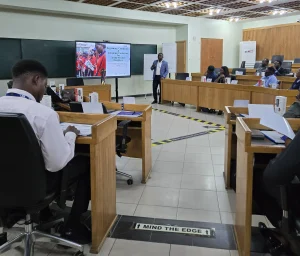
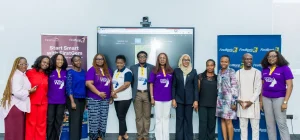
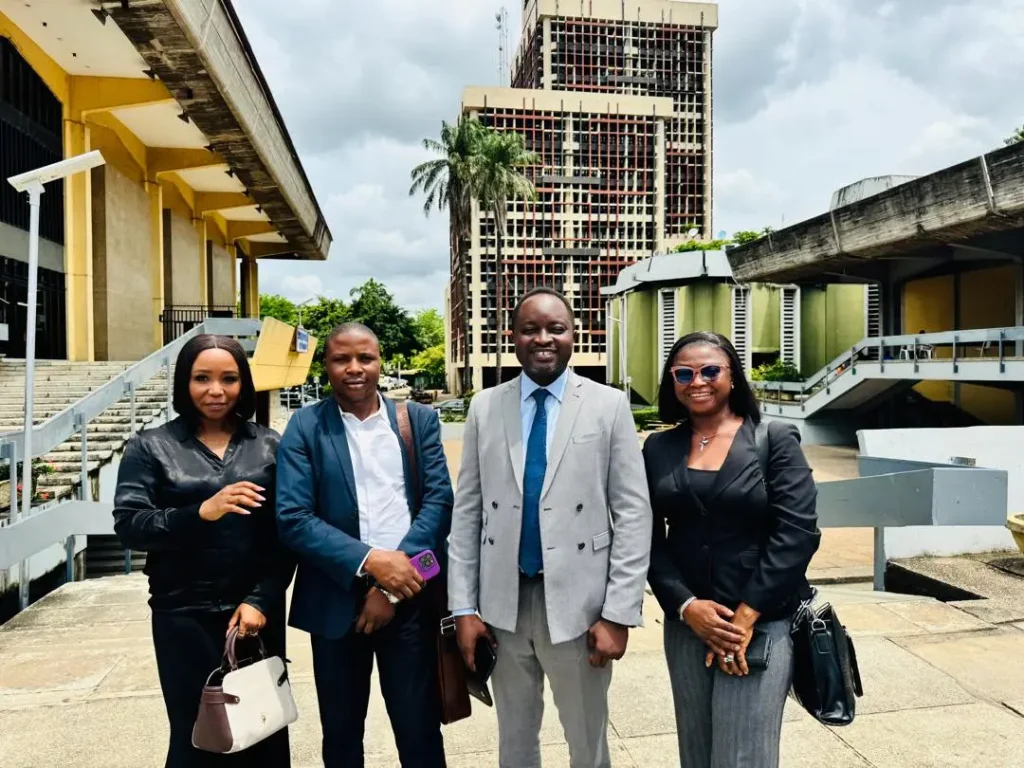
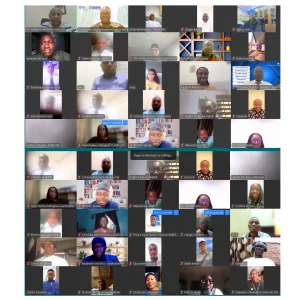
Earlier this year, 101 people from 25 organisations came together in the same virtual classroom. Financial regulators, state governments, pension operators and development agencies all logged in with one shared question: how do we bring Nigeria’s excluded millions into the formal financial system?
Five months later, the seventh cohort of the Sustainable Business Models (SBM) Certificate Course has an answer, and it is not written in theory. It is written in bank accounts opened, frameworks drafted, and institutions talking to each other for the first time.
Twelve capstone teams carried that answer into the field. Here is what they built, and what we learned from watching them build it.
Where Learning Left the Classroom
Three teams from SMEDAN did not stop at designing solutions. They took them into the field and came back with results.
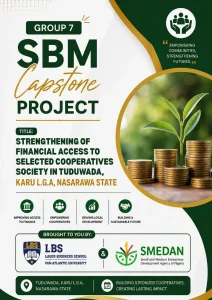
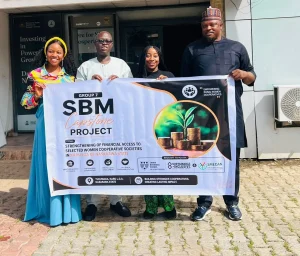
In Karu LGA, Nasarawa State, one team worked with six women’s cooperatives that had never held a single corporate bank account between them. By the time they were done, all six did. Thirty one new individual accounts had opened, the average trip to reach a bank had fallen from three hours to fifteen minutes, and correct understanding of the difference between savings and credit had jumped from 28% to 93% among participants.
In Osun and Yobe States, a second team asked a simple question. Would financial education actually stick if it was delivered in Yoruba and Hausa instead of English? Of the 60 rural market women they trained, 43 opened Bank of Agriculture accounts within three weeks.
A third team picked up where the money runs out: post disbursement support for entrepreneurs who had already received SMEDAN grants. Sixty beneficiaries across four geopolitical zones later, four cooperatives and eighteen individual grantees had moved into formal banking relationships they did not have before.
That is 165 people who can now save, borrow and transact through the formal system, because three teams decided a classroom project deserved a bus ticket and a weekend in the field.
When Regulators Start Talking to Each Other
Not every win looks like a bank account. Some look like institutions finally sitting in the same room.
One team, jointly staffed by two federal agencies for the first time in this cohort, one working in financial crimes and the other in consumer protection, built a joint framework for fraud prevention. It proposes a shared complaint network, joint enforcement activity and a public education campaign, all designed to launch without a single new law.

Another team, drawn from an identity agency and a national postal operator, found that Nigeria already has both a near universal digital identity system and a delivery network reaching almost every local government. Their framework proposes connecting the two, routing identity, delivery and payments through infrastructure the country has already built.
A team from a national financial regulator spent weeks surveying banks and farmers on an agricultural credit guarantee scheme and came back with a phased reform roadmap, with early actions ready to begin within the regulator’s own authority.
One team working directly with a national coordinating body took the boldest approach of the cohort. Rather than claim results they had not yet measured, they built a coordination framework and said so plainly, proposing it as a model the body could adopt going forward.
Four more teams turned a research lens on pension participation, financial literacy delivery, insurance adoption and women’s saving behaviour, laying groundwork that regulators and product teams will be able to draw on long after this cohort’s calls end.
What We Learned
A few themes showed up again and again across the twelve projects.
- Leadership matters more than logistics. In Karu, cooperatives with an actively engaged chair saw attendance above 90 percent. Where leadership was passive, attendance dropped to around 60 percent. Access to a bank was rarely the real constraint. Trust in a local leader willing to vouch for the process was.
- Language opens doors, but it does not remove every barrier. The Osun and Yobe team found that even after training was delivered fluently in Yoruba and Hausa, some participants still could not complete the group liability paperwork required for cooperative lending. Understanding a concept and being able to act on it are not the same thing, and good programmes need to plan for both.
- The support cannot end at disbursement. The team working with SMEDAN grant recipients found that a single round of business counselling, delivered weeks after the money had already landed, was enough to move real people into formal banking relationships. Inclusion often fails quietly, after the ribbon cutting, not during it.
- Nigeria does not lack financial literacy programmes. It lacks a shared scoreboard. One team found regulators, agencies and ministries all running their own initiatives, often with no common way to measure what was working. Coordination, not activity, is the missing piece.
- Sometimes the biggest barrier is not the public at all. One team found that ordinary Nigerians already trusted the institutions in question and used their services regularly. What they did not know was that one of those institutions already offers financial products of its own. The fix was not new infrastructure. It was better internal communication.
Thank You
None of this happens without the institutions who released their staff for five months, the facilitators who shaped the curriculum, and the Gates Foundation’s continued support for this work. Most of all, it does not happen without the people who showed up, argued in breakout rooms, carried spreadsheets into rural communities, and turned a certificate course into twelve reasons to believe Nigeria’s financial inclusion agenda is in good hands.
“The capstone project is where classroom concepts became institutional practice.”
As one participant put it when asked what stayed with them most.
Cohort 8 is already in progress. If this is what five months can build, we cannot wait to see what is coming.
The SIDFS Team, Lagos Business School