
Earlier this year, FirstBank took the stage at the United Nations’ Fourth International Conference on Financing for Development, presenting FirstGem as one of its flagship sustainable finance initiatives. Yet behind that global showcase was a quieter but equally important story. Years before FirstGem was presented on the global stage, the proposition underwent a period of reflection, testing and redesign through the Sustainable and Inclusive Digital Financial Services (SIDFS) Product Innovation Lab, helping to shape the version of the initiative that exists today.
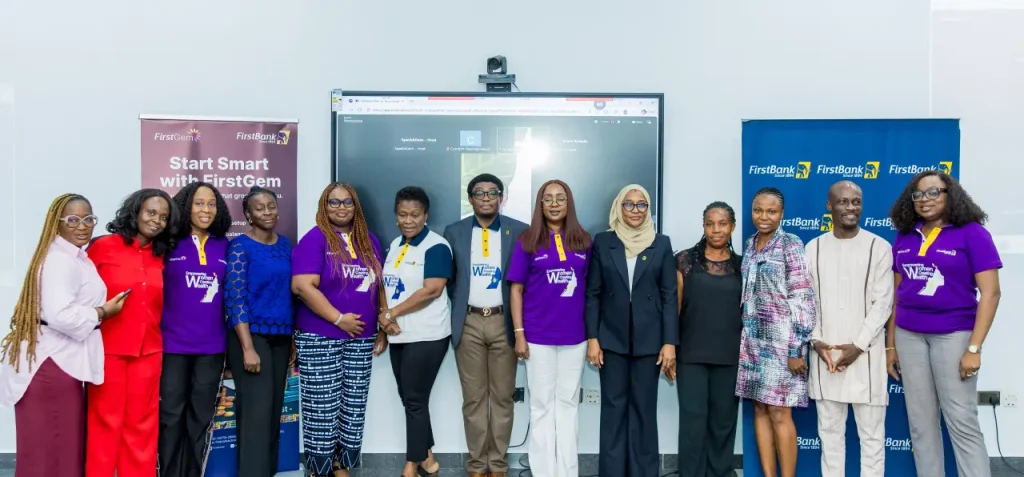
FirstBank introduced FirstGem in October 2016, and for years it has provided women-owned and women-led MSMEs with access to a dedicated single-digit loan facility, currently priced at 9 per cent per annum, without collateral. However, FirstGem was never designed as a loan product alone. It was conceived as a broader value proposition for women entrepreneurs, combining access to finance with concessions on charges and fees for current and business accounts, as well as membership of a thriving community where women can learn, network, mentor and be mentored. Over time, the initiative has evolved into a more comprehensive platform that supports women-owned businesses through financing, capacity building, networking opportunities and access to specialised benefits.
Today, FirstGem provides loans of up to ₦7.5 million, well above its initial ceiling of ₦5 million, with repayment terms of up to 24 months. It also serves sectors that were never part of the original design, including healthcare, education and digital skills. That evolution was not accidental. It was driven by a deliberate effort to reassess the proposition through Cohort 4 of the SIDFS Product Innovation Lab. Rather than focusing solely on growth, the FirstBank team explored a more fundamental question: which women entrepreneurs remained underserved by the product, and what barriers continued to limit their access?
A Lab Built for Existing Products, Not Just New Ones
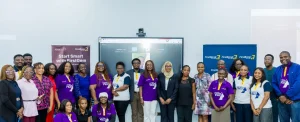
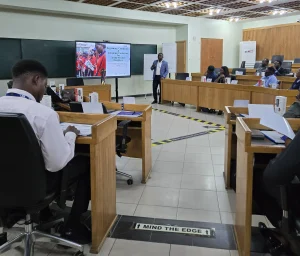
The Sustainable and Inclusive Digital Financial Services (SIDFS) Product Innovation Lab, an initiative of Lagos Business School, helps banks and other financial service providers design and strengthen financial solutions for underserved and unbanked populations using human-centred design principles. Importantly, the lab is not limited to developing new products. It also works with institutions to reassess existing propositions, identify gaps between customer needs and product performance, and test improvements that can enhance their impact. Nearly a decade after its launch, FirstGem provided FirstBank with exactly that opportunity.
The lab’s approach is structured around three phases: Prepare, Prototype and Pilot. Across each phase, human-centred design remains the guiding principle. Rather than treating customers as final validators of decisions already made, the process places them at the centre of product development from the outset, ensuring their needs, experiences and feedback help shape the solution every step of the way.
Prepare
Every team that enters the lab begins with the Prepare phase, which is deliberately the least glamorous part of the toolkit. Before any redesign work starts, the team must develop a clear understanding of who they are building for, what that customer’s financial reality looks like, and where the existing product falls short.
For a product like FirstGem, which was already well established, this meant setting aside assumptions and returning to the field to understand which women were still being left behind. It meant questioning whether product features, such as the loan ceiling and sector focus, that made sense in 2016 still reflected the realities of women entrepreneurs in Nigeria today.
Prototype
Once a team develops a clearer picture of the gap, the Prototype phase is where ideas begin to take shape. The emphasis is on testing ideas quickly and inexpensively before investing heavily in implementation. Rather than committing to a large-scale redesign based on internal assumptions, teams develop concepts and test them with real customers, keeping what works and discarding what does not.
This is the essence of human-centred design. Customers participate while the product is still flexible enough to change, rather than being asked to react after key decisions have already been made.
Pilot
The Pilot phase is where a redesigned idea meets the real world. Before any national rollout, the product is tested on a smaller scale to determine whether it performs as expected in real-life situations. It is the final checkpoint before significant resources are committed and where teams learn whether a solution that worked in a design session will also work when a customer walks into a branch seeking access to finance.
What Emerged from the Process
The impact of the redesign is now clearly visible. FirstGem today offers higher loan limits, more flexible repayment terms and broader sector coverage than when it was first launched. More importantly, the proposition has evolved beyond a lending product into a more comprehensive support platform, helping women entrepreneurs access not only finance, but also training, mentorship, networking opportunities and business development resources.
Through the initiative, FirstBank has supported the opening of 754 FirstGem Corporate Accounts and built an active online community of more than 61,634 members who connect to share ideas, opportunities and business experiences. The initiative has also facilitated the disbursement of ₦351 million under the FirstGem Fund, supporting 115 women-owned businesses with access to growth capital and reinforcing FirstBank’s commitment to advancing women’s economic participation.
Members benefit from leadership programmes, business and financial management training, wealth management and investment advisory sessions, mentorship opportunities, and access to select insurance and lifestyle benefits designed to support both personal and business growth.
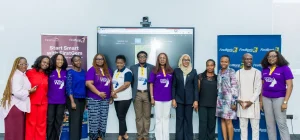
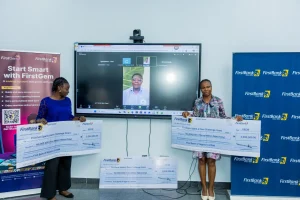
The proposition has continued to expand through initiatives such as the Spark A Gem Challenge, FirstBank’s flagship women entrepreneurship programme under the FirstGem umbrella. The programme attracted 356 applications from women entrepreneurs across Nigeria and delivered an intensive four-day capacity-building programme focused on business growth, financial management, design thinking, marketing, customer retention and funding readiness. Following the programme, 10 finalists advanced to Pitch Day, where grants were awarded to three outstanding women-owned businesses. In doing so, FirstBank extended its support beyond lending into mentorship, business development and early-stage funding.
Speaking at FirstBank’s 2026 International Women’s Day event, Dr Mrs Olaitan Martins, the Bank’s Group Executive for Corporate Banking, summarised the underlying philosophy succinctly: lending products should be designed with women in mind. That is precisely the capability that SIDFS’s Product Innovation Lab seeks to build within product teams, not as a one-off exercise but as a repeatable way of working.
Why This Story Matters
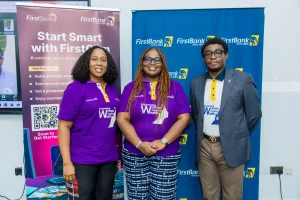
Sometimes, the most impactful innovation is not the creation of something entirely new, but the willingness to rethink what already exists. In FirstGem’s case, the discipline to listen more closely, test assumptions and redesign with customers at the centre helped transform a successful financial product into a more comprehensive platform for women’s economic empowerment.
As customer needs continue to evolve, the lesson is clear: products remain relevant not because they stay the same, but because organisations remain committed to improving them.